

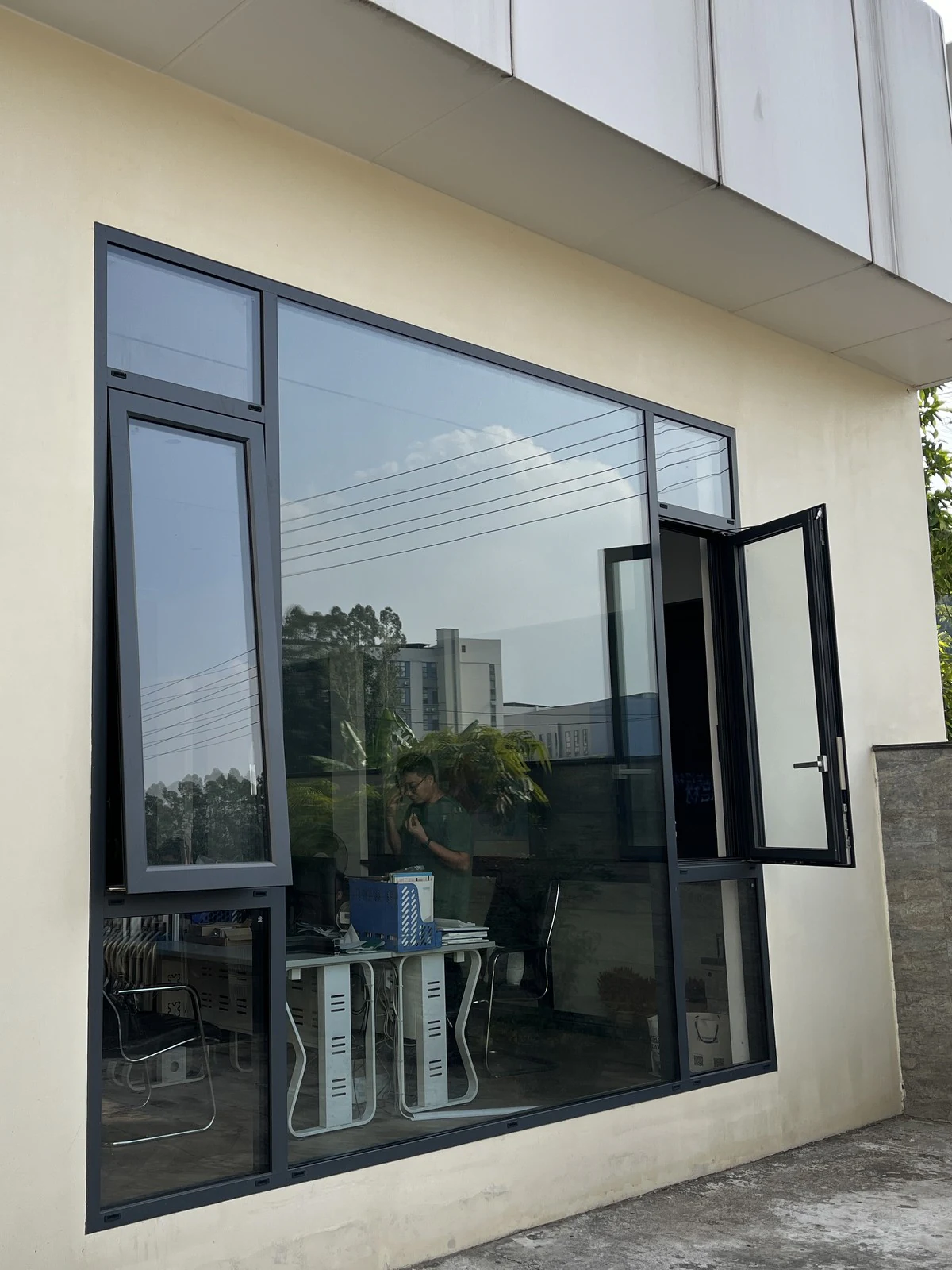
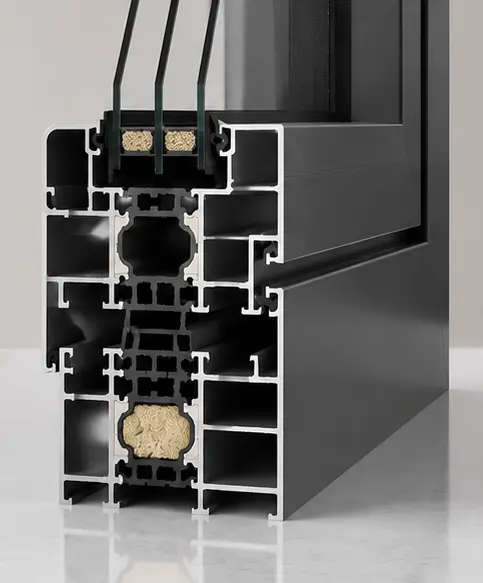
Three connected zones in the profile section
A thermal break section can be understood as an exterior aluminum shell, an insulating connection and an interior aluminum shell. Each has a distinct function, but their geometry must be coordinated to form a workable assembly.
| Section zone | Main function | Design details to review |
|---|---|---|
| Exterior aluminum shell | Weather-facing structure and finish | Drainage paths, outer gasket grooves, coating requirements and exposure |
| Insulating connection | Reduce direct heat conduction between the aluminum shells | PA66GF25 strip geometry, groove engagement, assembly strength and alignment with glass and seals |
| Interior aluminum shell | Interior structure, appearance and hardware interfaces | Corner connections, locking hardware, interior finish and assembly clearances |
What the insulating strips contribute
PA66GF25 identifies polyamide 66 reinforced with 25% glass fiber. In a mechanically assembled thermal break, strips connect the two aluminum sections through prepared grooves. Their shape and engagement must support the assembly as well as its thermal design.
Strip width is only one part of the design. Example designs include narrow sections around 14.8–24 mm and wider arrangements around 30–45 mm, with different strip and cavity shapes. These are design examples rather than a promise that every width suits every window. Confirm the complete section drawing, strip specification and assembly requirements for the selected system.
Wide or multi-chamber designs can support improved thermal performance, but width alone does not determine the final result. The aluminum geometry, cavity arrangement, glass edge and continuity of the insulating path also matter.
Compare systems using the right performance measure
A non-thermal aluminum section has an uninterrupted metal path from one side to the other. It may suit interior partitions or other applications without a thermal insulation requirement. A thermal break is generally considered when the frame needs to reduce heat transfer between conditioned and outdoor spaces.
Frame thermal transmittance, Uf, describes the frame. It should not be confused with a value for the complete window, which also includes glazing and its interfaces. Ask for calculations or test results for the actual system and configuration being specified, rather than treating a strip dimension as a certified U-value.
Thermal breaks can help reduce condensation risk by improving interior surface temperatures. Condensation still depends on indoor humidity, outside temperature, ventilation and installation details. Likewise, acoustic performance belongs to the complete window assembly; it cannot be assigned a fixed decibel improvement from the thermal strip alone.
Coordinate the section before production
Review the glass thickness, gasket fit, corner cleats, locking hardware and drainage paths together. An insulating connection that looks satisfactory in isolation may create assembly problems if its position does not suit the glass and seal arrangement.
Inner and outer aluminum parts can have different finishes where the system and production sequence allow it. Specify both colors, exposed faces and finish requirements before samples are prepared. Coating allowances at grooves and mating surfaces must be considered during the manufacturing review.
Guantian can review orders for assembled thermal break bars or separate aluminum sections and insulating strips for customers with their own assembly equipment. Confirm whether knurling and rolling are included, along with the section drawings, supplied lengths and inspection requirements.
Frequently asked questions
Does a wider thermal break always produce a better window?
Not on its own. Performance depends on the full frame and glazing arrangement, sealing and installation. Compare the complete designs against the project’s thermal, structural and assembly requirements.
Can I buy the inner and outer profiles separately?
Yes. Provide the mating section and insulating-strip drawings and explain your assembly process. We will confirm the supply condition, including any groove preparation, before the order is finalized.
Send your window or curtain-wall section through WhatsApp so our team can review the profiles, insulating strips and assembly scope together.