

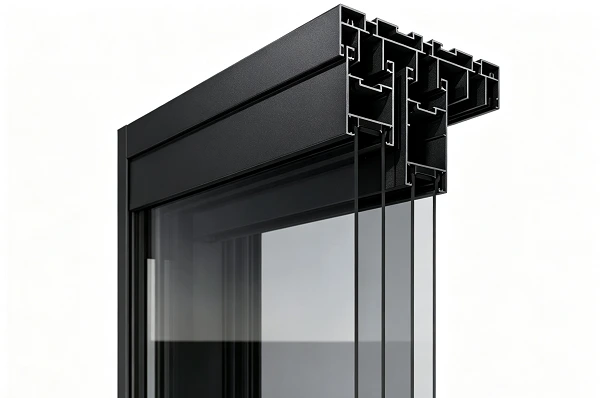
Start with the hardware, gaskets and glazing
Locks, rollers, hinges, corner cleats, glazing beads and EPDM seals all depend on their mating geometry. A similar external profile outline does not establish compatibility with a chosen hardware system. Review the actual parts and critical dimensions, including the effect of coating inside channels.
Custom profiles can provide a specific gasket groove, locking interface or glazing allowance. They may also allow an existing frame to work with a new sash adapter or sill track. Trial-fit the finished samples; an uncoated extrusion that assembles correctly may behave differently after finishing.
Design for the complete window or door system
Large openings, wind exposure, drainage and thermal requirements can affect mullion geometry, sill details and thermal-break construction. A profile is only one part of that system. Glass, seals, hardware, joints and installation also influence the completed window's behavior.
For example, a design may use a wider PA66GF25 thermal-break strip, with sizes such as 24–35 mm considered where appropriate. Strip width alone does not establish a U-value or compliance with a local building requirement. The responsible project designer must specify the complete-system targets and any testing or calculation required.
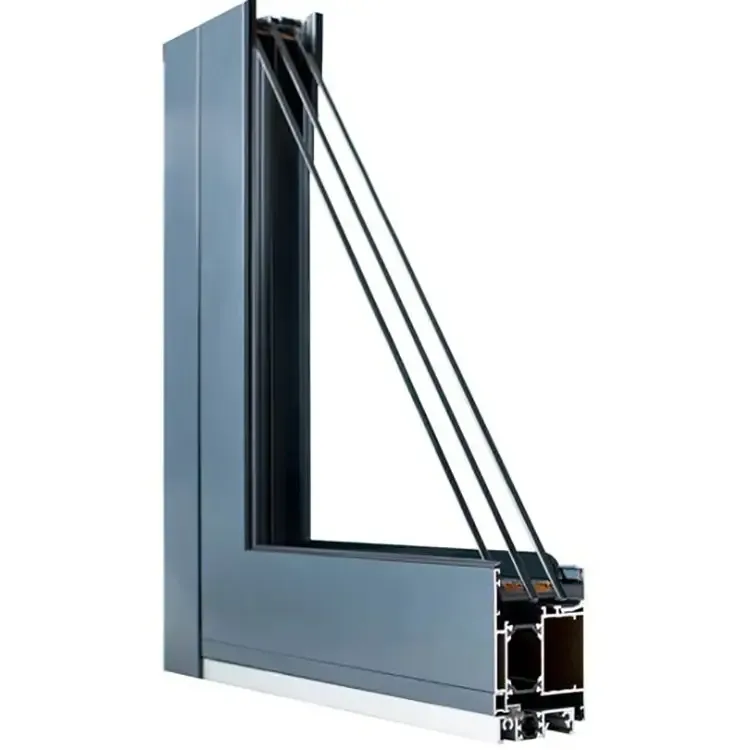
Use custom features to simplify fabrication
Suitable screw ports, locating grooves and snap-in glazing details can reduce separate operations or make assembly more repeatable. Assess each feature against the tools and fasteners used by the fabrication shop. Some operations may be removed, while others remain necessary for drainage, connections or adjustment.
Weight optimization is another reason to review a custom section. Move material away from areas that do not need it only after checking stiffness, strength, connections and manufacturing limits. Compare tooling, trials, finishing and repeat quantities together; neither a fixed percentage of weight saving nor first-order tooling payback should be assumed.
| Project need | Potential custom feature | What to verify |
|---|---|---|
| Local hardware compatibility | Dedicated locking channels, roller tracks or gasket grooves | Finished sample fit with the actual components |
| Glazing and frame interfaces | Specific bead, adapter or corner-cleat geometry | Glass allowance, joint alignment and assembly sequence |
| Thermal and weather requirements | Reviewed thermal-break, drainage or mullion geometry | Complete-system design and required performance tests |
| Fabrication efficiency | Screw ports, locating features or snap-in details | Fasteners, tooling, joint performance and practical labor savings |
| Distinctive product series | Customer-specific cross-sections and interfaces | Drawing rights, tooling terms and confidentiality agreement |
A Guantian apartment-project example
For an overseas apartment development, Guantian supplied thermally broken profiles for casement and sliding windows, with matching hardware and sealing gaskets. The customer's original section drawings did not provide sufficient allowance for the thicker exterior powder coating in certain hardware and gasket channels.
The engineering review used actual rollers, handles, corner cleats and EPDM samples. On that project's approved die drawing, each side of the relevant channels was widened by 0.15 mm. This was a project-specific allowance, not a rule for every profile. A partner die maker produced the revised tools.
Guantian extruded the 6063-T5 profiles and completed thermal-break strip assembly and textured gray exterior powder coating in-house. The team trial-fitted coated samples and checked 45-degree corner specimens before customer approval. Batch checks included the project's 60–80 μm coating requirement, channel fit and color consistency. The customer reported smooth frame assembly after delivery. This outcome does not replace any required testing of the completed window system.
Define tooling and confidentiality terms before development
A proprietary profile series may help differentiate a product, but confidentiality, ownership and exclusive use need clear written terms. Identify who may use the drawings and dies, how revisions are approved and what happens to the tools between repeat orders.
It is not always necessary to replace an entire system. A hybrid approach using suitable existing profiles with one or two custom mating sections can be considered after compatibility review. Confirm the availability and suitability of every retained component before approving the new design.
Frequently asked questions
Can we start from an existing catalog system?
Yes. We can review whether existing profiles meet your requirements and whether a limited number of custom adapters or tracks would complete the assembly. Compatibility must be checked against the actual components.
Can project drawings be covered by an NDA?
Discuss your confidentiality and exclusive-use requirements before sharing detailed design information or commissioning tools. The agreed terms should cover drawings, samples and die use.
Send your concept, sample sections, mating components and performance targets on WhatsApp. We can assess whether existing profiles, selected custom sections or a new series would suit the project.