
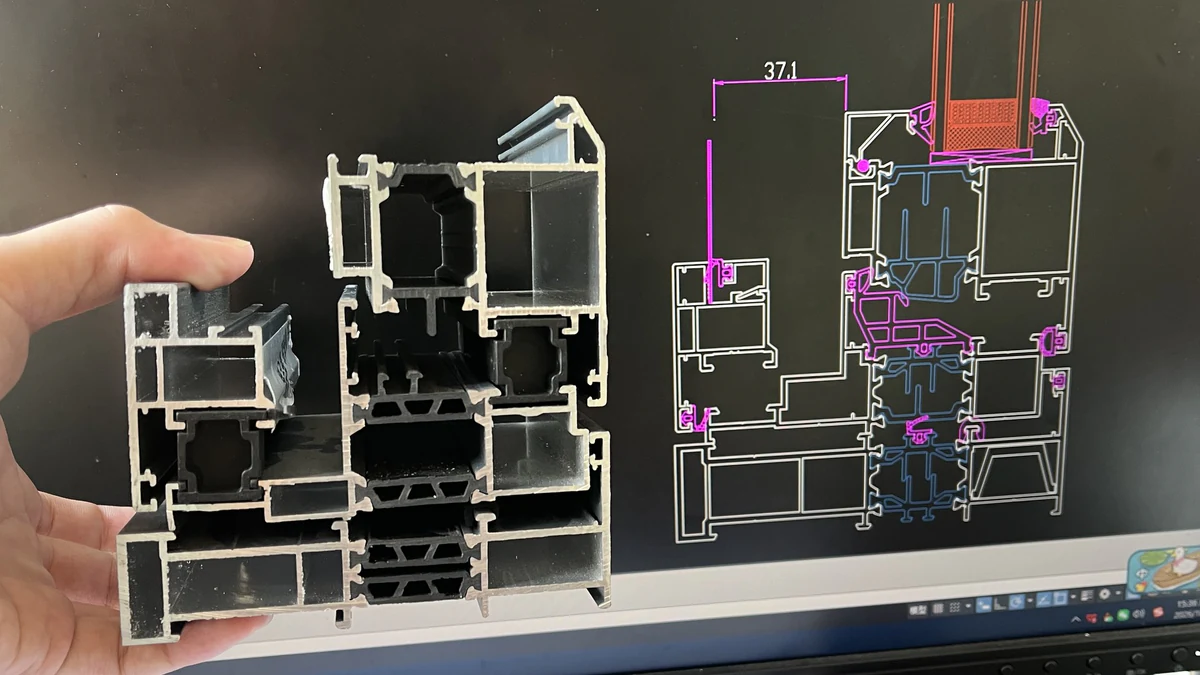
Prepare the drawing and application requirements
Send a dimensioned cross-section drawing, the intended application and the required quantity. CAD files such as DWG or DXF are useful for section review, while STEP or IGES files can help explain features that require subsequent machining. If drawings are not available, a physical sample or a clearly dimensioned sketch can provide a starting point for engineering discussion.
Specify the alloy and temper, cut length, finish and any additional operations. Identify the surfaces that will remain visible after installation and show the parts that must fit the profile. For window and door sections, these may include rollers, corner cleats, handles and gaskets. For industrial profiles, they may include sliders, bearings, fasteners or connecting brackets. Provide actual components when their fit cannot be established reliably from drawings alone.
Review the section for manufacturing and assembly
Our technical team reviews the relationship between wall thickness, cavities, unsupported features and the intended extrusion process. A section that looks acceptable in a drawing may still need adjustment to improve extrusion stability or maintain a practical assembly clearance. Proposed changes are discussed with the customer before the drawing is approved.
The review also considers finish buildup, visible extrusion marks and machining datums. Critical dimensions should be distinguished from general dimensions so that inspection focuses on the features that determine function. Guantian operates seven extrusion lines with presses rated from 800 to 1,500 metric tons; the appropriate production route is selected after the section has been reviewed.
Approve the production drawing before tooling begins
The approved profile drawing should record the drawing revision, alloy and temper, critical dimensions, tolerances, visible surfaces and relevant finishing allowances. It should also state whether a dimension applies before or after surface treatment. Any proposed machining allowance needs to be identified separately from the final component dimension.
Die charges, ownership, confidentiality, maintenance and any rebate arrangements should be agreed in writing for the order. These commercial terms should be confirmed before tooling is released. Keeping one approved revision avoids discrepancies between purchasing, engineering, the die maker and production.
Manufacture the die and evaluate the first trial
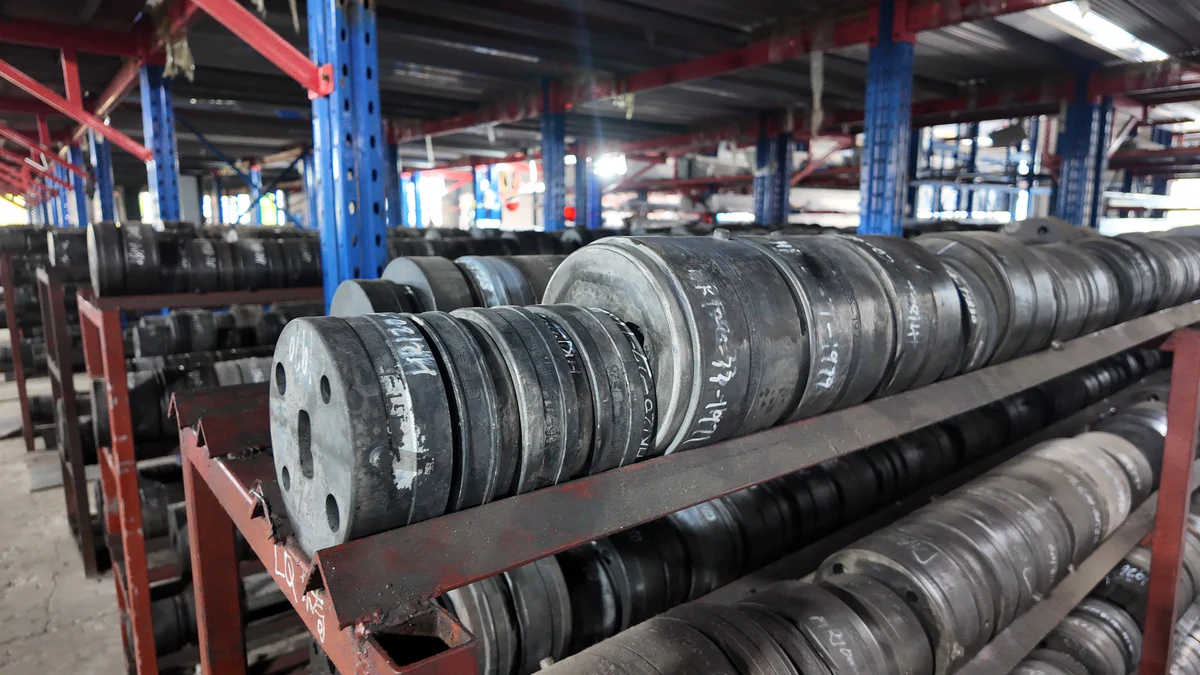
Specialist partners manufacture the dies, supported by Guantian's in-house extrusion trials and adjustments. Trial material is checked against the approved drawing after the appropriate processing and cooling stages. Where necessary, the die is adjusted and the trial repeated before the section proceeds to sample approval.
Measurements alone do not establish whether the assembly works. GO/NO-GO gauges and customer-supplied components help check functional features that are difficult to assess with calipers. Relevant hardness checks are also included. If the order requires a finished or machined component, the sample should represent those operations rather than only the unfinished extrusion.
Finish the sample and confirm the complete assembly
Powder coating, wood-grain transfer, cut-to-length sawing and standard punching are performed in-house. Anodizing, electrophoretic coating and more complex machining are coordinated through specialist partners. These operations are included in the sample route when they affect appearance, fit or the agreed inspection criteria.
In Guantian's documented overseas apartment window project, the engineers reviewed the actual hardware and EPDM gaskets before die manufacture. The relevant channels were widened by 0.15 mm on each side to allow for the specified powder coating. That allowance belonged to the approved section and finish; it is not a standard allowance for every profile.
Record sample approval before batch production
Review the dimensions, finish and functional fit together. A written approval should identify the sample, drawing revision, color reference and any outstanding changes. Retaining a reference sample gives both parties a practical basis for later appearance and fit comparisons. Confirm the production schedule, inspection plan and packaging after the sample requirements have been resolved.
Frequently asked questions
Can we start without a CAD drawing?
Yes. Send a sample, photographs and the dimensions you can provide. Our team will assess what additional information is needed before preparing a drawing for approval.
What happens if the first trial needs adjustment?
The team compares the trial with the approved drawing and identifies the required correction. Timing and costs depend on whether the issue concerns the original specification or a subsequent design change.
Are tooling charges refundable?
Any rebate or credit arrangement must be included in the agreed commercial terms. Do not assume that the same policy applies to every die or order.
Should we approve an unfinished or finished sample?
Approve a sample that represents the requirements affecting your application. A finished sample is particularly useful when coating, machining or mating components influence fit.
Send your project for review
Email your drawing, application, finish, mating-component details and expected quantity to [email protected], or contact us on WhatsApp at +86 198 6744 4019. The website inquiry form prepares an email draft; attach your drawings in your email account and send the completed message.