

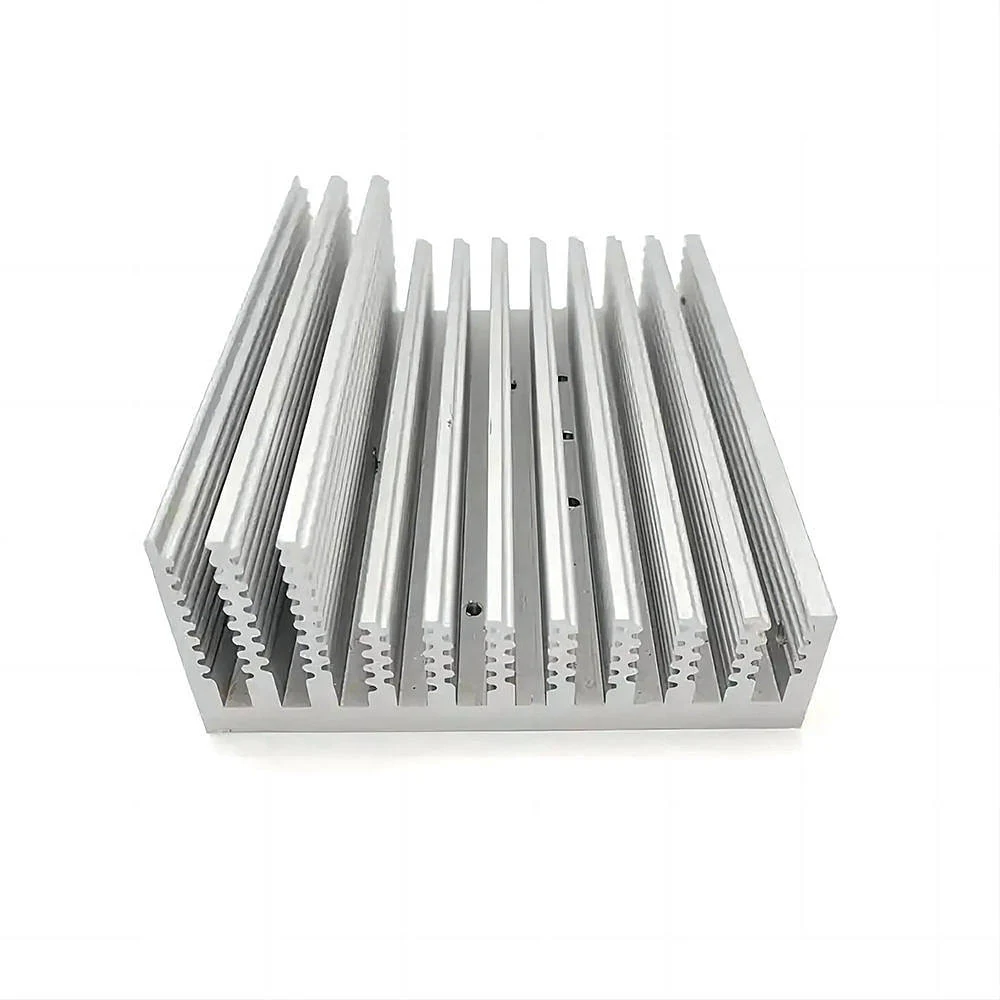
Where extruded profiles fit into the equipment
Guantian supplies extrusion and fabrication options for charging infrastructure, energy-storage equipment, electronics housings and factory automation. The table below outlines components to discuss during drawing review.
| Application | Typical profile components | Production details to define |
|---|---|---|
| EV chargers and power cabinets | Corner posts, door frames, mounting rails and exterior covers | Alloy, seal interfaces, coating, cut lengths and punched features |
| Inverters and power-electronics cooling | Finned heat sinks, contact bases and electronics housings | Fin geometry, flatness, surface condition, holes and threads |
| Battery production and material handling | T-slot frames, conveyor rails, roller tracks and guarding frames | Loads, straightness, slot fit, connection details and assembly length |
| Utility bodies and auxiliary fittings | Edge trims, step rails, rack bars and mounting brackets | Intended use, required properties, punching, deburring and finish |
Coordinate material, finish and assembly
6063-T5 or T6 may be considered where section complexity and finish are priorities; 6061-T6 may suit parts with specific mechanical requirements. The correct choice depends on the drawing and intended service. Provide required properties and any certification requirements with the inquiry.
For outdoor cabinets, identify exposed faces, color, coating system and environmental conditions. Example specifications use outdoor powder coating around 60–80 μm, subject to the agreed coating specification. Seals, drainage and interfaces must be designed as part of the complete enclosure: the profile finish alone does not establish an enclosure protection rating.
Confirm the dimensions that control assembly, including sliding nuts, panel grooves, gasket channels and cover engagement. These features should be assessed in their finished condition, taking coating and subsequent machining into account.
Define heat-sink requirements beyond the extrusion
A heat-sink inquiry should identify the thermal contact face, mounting pattern, available space and required cooling performance. Fin spacing, wall thickness and the section’s overall size need an extrusion feasibility review before tooling is approved.
Where the thermal interface needs tighter flatness than the extruded surface can provide, Guantian can coordinate CNC face machining through production partners. Example specifications include flatness targets in the 0.05–0.10 mm range; these are requirements to assess against the part dimensions, datum, clamping and measurement method, not a blanket capability for every heat sink.
Specify any surface roughness, thread, hole-position or anodizing requirements at the same time. A dimension measured before machining or coating may not describe the surface used in the finished assembly.
Confirm the present manufacturing scope
Current drawing review is based on Guantian’s existing production resources, including 800–1500-tonne extrusion presses and coordinated secondary fabrication. Press tonnage is only one feasibility factor; section size, geometry, alloy and tooling also need assessment.
The planned Sihui development for 2027 is a future expansion. It should not be used as the basis for a current delivery commitment or assumed capacity for larger profiles. Confirm what can be manufactured now when planning samples and production.
The supply scope described here concerns equipment and auxiliary profiles. Crash-critical automotive structures and parts requiring an automotive qualification program need a separate supplier-qualification review; this page does not claim that capability or certification.
Prepare the engineering review
Send the section drawing, relevant 3D model, quantity, finish and critical dimensions. Mark thermal contact faces, mating parts and load-bearing connections. Identify which machining steps belong in the supplied part and which will be performed at your factory. Tooling and sample schedules can then be confirmed against the actual scope rather than a generic lead-time promise.
Frequently asked questions
Can you supply a machined contact face on an extruded heat sink?
We can review coordinated CNC machining for the contact face. Provide the required flatness, roughness, datum and measurement method so feasibility and inspection can be confirmed for that part.
Can a cabinet profile establish the protection rating of the equipment?
No. Seals, joints, openings, panels and assembly details all affect the finished enclosure. Provide the system requirements so the profile interfaces can be reviewed within that design.
Share your enclosure, heat-sink or equipment-frame drawings through WhatsApp for a review of the extrusion and machining scope.