

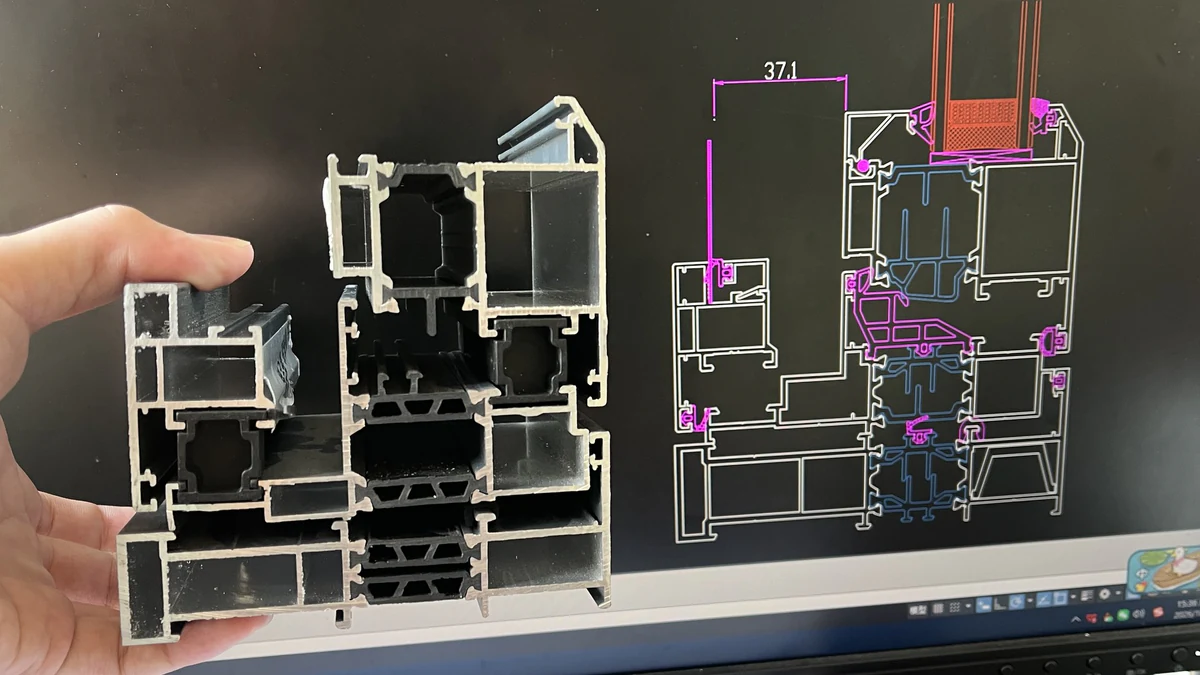
Choose the alloy and temper for the actual application
Do not specify 6061-T6 automatically for every component. Depending on the design, 6063-T5 or 6063-T6 may suit architectural frames, decorative louvers, lighting housings or machine guards. A more demanding structural or machined component may still require 6061-T6. The engineering requirements, including loads, fasteners and service conditions, determine the choice.
Alloy selection affects billet cost, extrusion conditions, achievable section detail and finishing. Compare these together. A hardness target alone does not establish that one alloy and temper can replace another, and material substitutions need the customer's engineering approval.
Reduce unnecessary metal without weakening the design
Weight per meter matters because material savings repeat along every bar. Review heavy corners, nonfunctional webs and abrupt changes in wall thickness. More even walls, properly located ribs or a hollowed-out boss can sometimes improve the distribution of material while making the section easier to produce.
An 8–15% reduction in meter weight is a useful project-specific optimization target in suitable redesigns, not a reduction that every section can achieve. Replacing a uniformly thick 2.5 mm wall with thinner walls and ribs requires a fresh assessment of section properties, local stability, connections and manufacturing limits. Keep metal where the approved loads and assembly features need it.
Compare die complexity with the function required
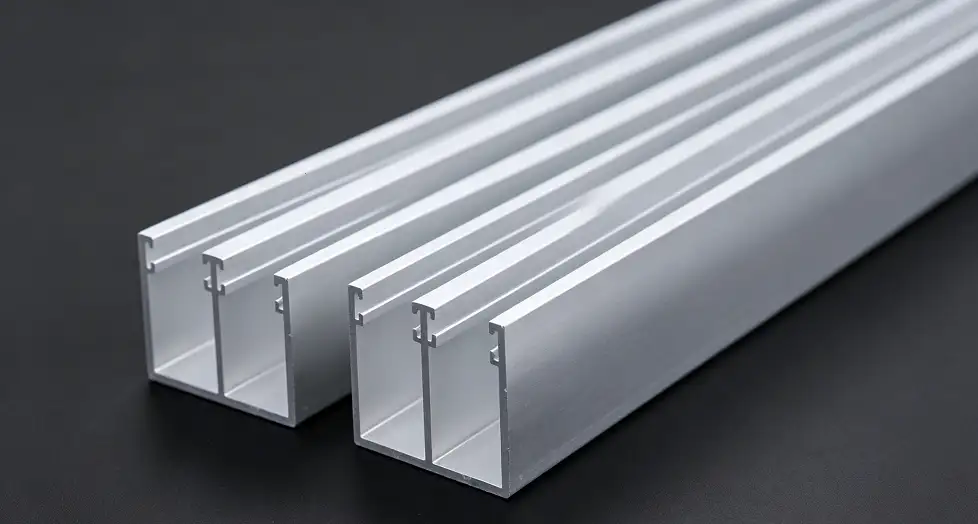
A closed, multi-cavity section may be necessary, but it is not always the only solution. For a cable cover, an open channel with a separate snap-in cover may simplify tooling. An integral screw port may remove a separate drilling or tapping operation if the fastener and joint design support that approach.
Compare the complete assembly cost. An extra cover brings its own tooling, material and fitting work; a screw port still needs an approved fastener and joint-strength assessment. Savings in one operation should not create unaccounted work elsewhere.
| Cost area | Option to review | Approval needed |
|---|---|---|
| Metal per meter | Replace unnecessary mass with a more efficient wall and rib layout | Structural performance, minimum walls and extrusion feasibility |
| Die construction | Compare a closed hollow section with an open or semi-hollow alternative | Assembly function, appearance and total part count |
| Secondary machining | Integrate suitable screw ports or locating features into the extrusion | Fastener compatibility, joint strength and finished dimensions |
| Cutting waste | Match supplied lengths to the production cutting plan | Saw kerf, end trimming, tolerances and transport limits |
Apply tight tolerances and premium finishes selectively
Identify the dimensions that control gasket fit, hardware location or sliding movement. An unnecessarily tight tolerance across every surface can increase die-adjustment work, rejection risk and machining. A tolerance such as ±0.10–0.15 mm may be appropriate for a reviewed feature, but it is not a universal capability for all sections. Mark datums and state whether dimensions apply before or after coating.
Guantian has two in-house powder-coating and wood-grain lines. Grouping compatible work in approved standard colors can reduce changeovers and small-batch powder costs. Specify the coating system and performance required; a 60–80 μm powder-film range is a project specification, not a substitute for selecting a suitable coating.
Plan batch quantities and cut lengths together
For four 1,420 mm components, the finished lengths total 5,680 mm. A 5,700 mm supply length leaves only 20 mm for all saw cuts and end trimming, so it must be checked against the actual cutting process before replacing a 6,000 mm bar. This kind of layout review can reduce offcuts without promising zero waste.
Consolidate quantities by section and color where practical. The economical batch depends on profile weight, finish, setup and delivery needs; there is no single order minimum that removes all setup charges. Compare annual demand and release quantities as well as the first shipment.
Frequently asked questions
Does a thinner wall always reduce the strength of a frame?
Its effect depends on the complete geometry, material, connections and loading. Ribs or a different section can sometimes improve efficiency, but a thinner redesign needs engineering approval and any required testing.
Can you assess an existing profile for cost reduction?
Yes. Send the current drawing, alloy, finish, required performance and expected quantities. We can compare practical changes and quote them against the existing specification.
Send your drawing, current meter weight and expected order or annual quantity on WhatsApp. We will review the opportunities for reducing cost while retaining your approved requirements.