

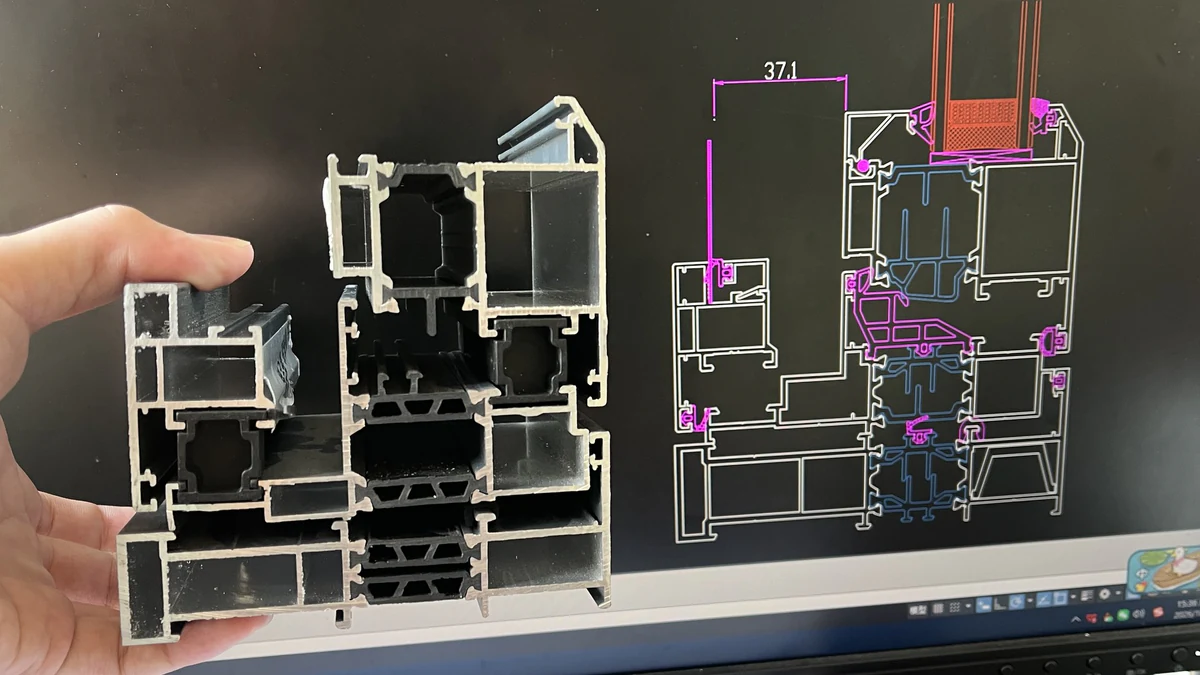
Choose the alloy designation accurately
Use the complete alloy and temper designation shown on your engineering specification. 6063, 6061, 6005 and 6005A belong to the 6000-series family, but they are not interchangeable names. In particular, 6005 and 6005A have different composition requirements; a substitution requires approval.
Material choice should be settled alongside the section and acceptance criteria. Use the comparison below to frame the discussion, then refer to the alloy and temper guide for a fuller application review.
| Material option | Typical reason to consider it | RFQ decision |
|---|---|---|
| 6063 | Complex architectural geometry and decorative finishes | Specify temper, visible surfaces and critical mating features |
| 6061 | Industrial components with defined mechanical and machining requirements | Provide required properties, thickness and fabrication details |
| 6005 or 6005A | Structural hollow profiles where both geometry and properties matter | State the exact grade, temper and standard; confirm availability |
The eight-point specification checklist
Attach these details to the current drawing revision. Where a value has not been decided, describe the intended use and ask for a recommendation.
- 1. Drawing and revision: provide DWG, DXF or STEP files with a readable PDF. Include overall dimensions, wall thicknesses, units and the drawing revision that should be quoted.
- 2. Alloy and temper: state the full designation, such as 6063-T5, 6063-T6 or 6061-T6, together with the governing material standard and required test documentation. If you need a recommendation, describe the application and performance priorities.
- 3. Critical dimensions: highlight gasket grooves, hardware slots, bearing seats and other mating features. Identify tolerances and whether they apply to the unfinished profile or the finished, coated component.
- 4. Visible surfaces: mark the faces customers will see after assembly. Provide an appearance sample or acceptance requirement so die layout, handling and subsequent machining can be reviewed accordingly.
- 5. Finish and exposure: identify mill finish, anodizing, electrophoretic coating, powder coating or wood grain. Specify color, texture, thickness where applicable, and indoor, outdoor or coastal exposure. Reference an approved sample when color matching matters.
- 6. Length and fabrication: state the delivered length, cut tolerance, machining datums, holes, threads, punching and deburring requirements. Export bar lengths such as 5.80–5.95 m are options to review with the selected packaging and container plan, not an automatic default.
- 7. Quantity and schedule: give trial quantities in pieces or weight, expected repeat demand and required delivery dates. Distinguish a sample order from the estimated annual volume so tooling and production planning use the right basis.
- 8. Packaging and delivery: describe bundle, carton, pallet or crate requirements, labels and protection for visible surfaces. Identify the delivery term and named place or port, including any proposed collection from the Sanshui plant or Nanhai warehouse.
Separate confirmed requirements from open decisions
Keep one version of the specification for all suppliers. If you compare different alloys, finishes or quantities, ask for clearly separated options so price differences can be traced to the same scope. Note whether tooling, samples, machining, packaging and freight are included.
Before tooling begins, review the proposed material, section drawing, critical dimensions and sample plan. Changes to a groove, coating allowance or machining datum can affect mating parts even when the overall profile dimensions remain the same.
Frequently asked questions
Is T6 simply a water-cooled version of T5?
No. T5 is cooled from an elevated-temperature shaping process and artificially aged; T6 is solution heat-treated and artificially aged. Specify the required temper and properties rather than prescribing a cooling medium without reviewing the production route.
Can I request a quotation before every item is fixed?
Yes. Send the available information and identify unresolved items. The quotation should state its assumptions and any items requiring confirmation before tooling or production.
Send the checklist and your latest drawings through WhatsApp. We will review the scope and clarify open specifications before quoting.