
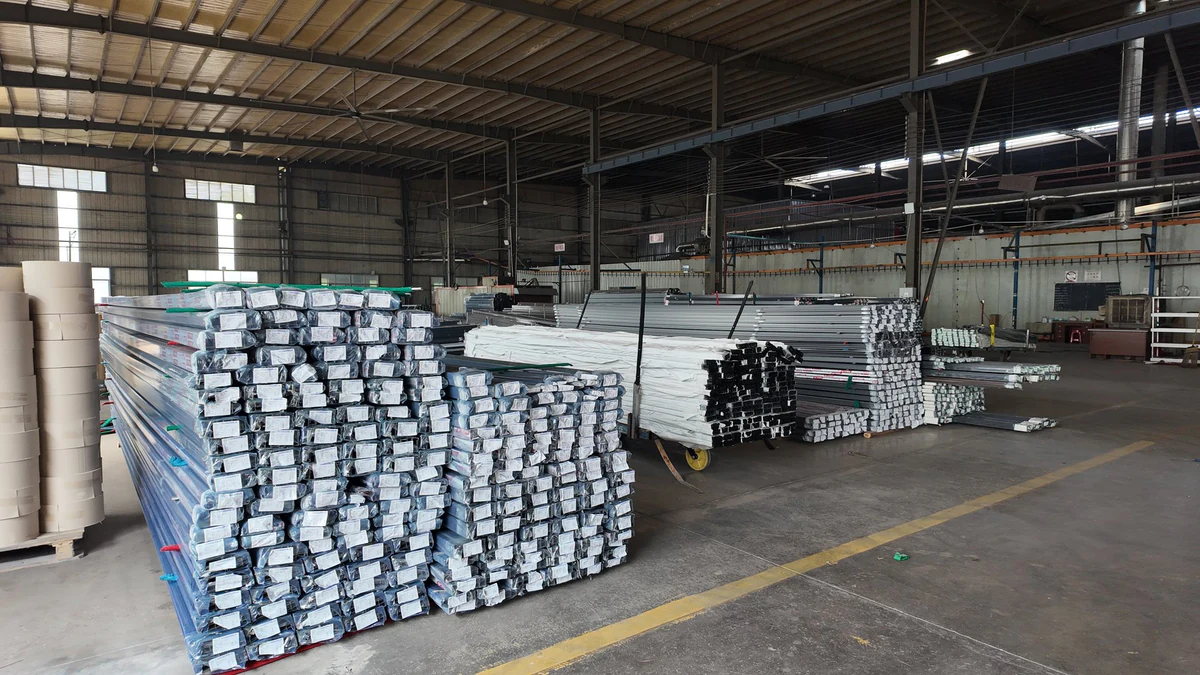
Match bar length to the actual container
A typical 20GP container has an internal length of approximately 5.89 m. A 6.0 m bar will not fit straight inside. A 5.80 m packing length is a common planning choice; 5.85 m may be possible when the actual container, end protection and loading method have been checked. Packed length matters more than the nominal metal length.
A typical 40GP or 40HQ container has an internal length of approximately 12.03 m. Two rows of profiles around 5.80–5.95 m can make practical use of this space. Extra-long profiles around 11.8 m require a separately agreed production, handling and loading plan. Container dimensions vary, so confirm the equipment supplied by the carrier before final cutting.
A 40HQ gives more height, but it does not remove weight limits. Loading must satisfy the container's rated payload and maximum gross mass, weight distribution, carrier restrictions and the road limits at both ends. Some profile orders fill the available space first; compact heavy sections may reach the permitted mass first.
Planning tonnage by profile and packaging type
| Profile and packaging example | 20GP planning range | 40HQ planning range |
|---|---|---|
| Compact solid sections or heavy guide rails in soft bundles | 14–18 metric tons | 23–26 metric tons |
| Typical window and door sections with film, foam and kraft wrapping | 9–13 metric tons | 18–22 metric tons |
| Bulky hollow curtain-wall sections | 6–9 metric tons | 12–16 metric tons |
| Delicate fabricated parts in protective crates | 7–10 metric tons | 14–18 metric tons |
These are planning examples from Guantian's loading guidance, not guaranteed payloads. The actual quantity follows the section mix, bundle cross-section, crate dimensions, loading clearance and applicable mass limits. Large hollow sections and extensive protective packaging can reduce the metal weight substantially. Send the complete packing list to obtain a useful loading estimate.
Choose mill lengths using the finished cut list
Suppose a workshop needs four components at 1,420 mm each. Their combined finished length is 5,680 mm before saw kerf and end trimming. A 5,800 mm bar leaves a nominal 120 mm remainder, about 2.1% of the bar; a 6,000 mm bar leaves 320 mm, about 5.3%. Both calculations exclude the material consumed by cutting.
A custom 5,700 mm bar would leave only 20 mm for all cuts and end trimming in this example. That can work only if the actual saw kerf, number of cuts and end condition fit within the allowance. Do not order an exact multiple of finished lengths without adding these losses. A practical cutting plan compares several bar lengths against both component yield and container fit.
Custom lengths in an agreed range, for example around 5.60–5.95 m, can reduce scrap for a suitable repeated cut list. The achievable saving depends on the component mix and cutting method. There is no universal percentage saving or zero-waste length for every order.
Consolidation, loading and dispatch checks
Confirm whether the shipment is EXW, FOB or another agreed trade term, together with the collection address and responsibilities. Custom manufacturing is coordinated at Sanshui; available catalog stock may be collected from the Nanhai warehouse. Profiles, hardware and gaskets can be consolidated when their quantities, arrival dates and packing arrangements have been agreed.
Plan heavy bundles low down, provide suitable dunnage and distribute the load appropriately. Protect finished surfaces from contact with straps, neighboring bundles and the container. Labels should connect each bundle to the profile code, finish, length, quantity and packing list. Loading photographs and the container seal record help the buyer and forwarder check dispatch.
Prepared, straightforward loading may take around two to three hours, but mixed cargo, special restraints or inspections can change the schedule. Leave enough time for the driver and forwarder, and check that the loading area and lifting equipment suit the longest bundles.
Frequently asked questions
Should we choose a 20GP or a 40HQ for a small order?
Compare the total shipment volume, permitted mass, freight quotation and handling costs. A 40HQ is not automatically economical for every order. We can estimate the packed volume once the section mix, lengths and packaging are known.
Is there a fixed minimum order for custom lengths?
The minimum is confirmed by section, alloy, finish and production plan. Requests around 500 kg to 1 metric ton per section may be considered for suitable projects, but these figures are not a universal minimum or a guarantee of acceptance.
What should our forwarder receive before collection?
Provide the agreed collection location, bundle or crate sizes, gross weight, lifting requirements, ready date and export documents. Confirm the container type and packed-length clearance before the metal is cut.
Request a loading and cutting review
Send the section list, quantities, proposed bar lengths or finished cut list, packaging requirements and destination. Include your forwarder's details if available. Contact us on WhatsApp to discuss a loading plan alongside the manufacturing quotation.