

Understand the complete coating system
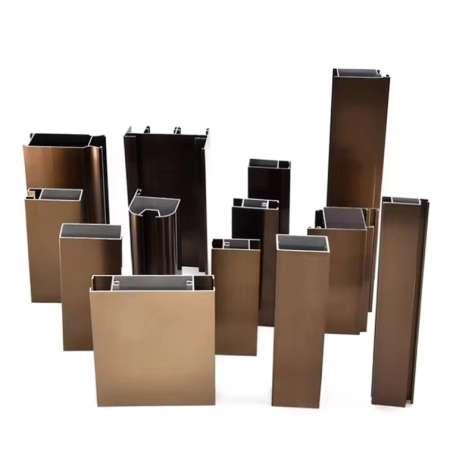
The finished surface combines the prepared aluminum, anodic oxide layer and electrodeposited resin. Available appearances can include silver, champagne and bronze tones, with gloss or matte options depending on the selected process. Approve a physical sample rather than relying on the finish name alone.
Example specifications for this finishing route include composite films in the 15–25 μm range. This is a project discussion range, not a universal definition of e-coating. The order must identify the required oxide layer, resin system, total film and test method. Thickness values for individual layers must be compatible with the total specified film.
Follow the process from preparation to curing
Preparation removes contamination and develops the required base appearance. Depending on the approved sample, the route can include degreasing, controlled etching, polishing or fine blasting. Existing scratches and extrusion features should be assessed before the profile enters the finishing line.
Anodizing forms the oxide layer; coloring is added where required. The profile then enters the electrophoretic bath, where controlled electrical and bath conditions deposit the resin. Rinsing and subsequent curing complete the specified system. The curing schedule follows the resin supplier's requirements and the actual part conditions rather than a temperature chosen in isolation.
Although immersion can help reach complex shapes, it does not guarantee uniform coverage inside every recess or closed cavity. Profile geometry, drainage, fixturing and electrical conditions must be reviewed for the real section.
Check the defects that affect appearance and durability
An inspection plan should connect the visible defect to the relevant process checks. The examples below identify issues to investigate; a defect can have more than one cause.
| Issue | Possible process factors | What to verify |
|---|---|---|
| Orange peel or pinholes | Bath condition, voltage, contamination, rinsing or curing | Visible faces, process records and agreed surface acceptance |
| Color variation | Base preparation, coloring conditions or curing variation | Representative finished sections against approved color-limit samples |
| Poor adhesion | Contamination, preparation or an unsuitable curing cycle | Adhesion testing under the agreed procedure and acceptance criteria |
| Incorrect film thickness | Coating process, geometry or measurement location | Specified layer and composite-film requirements on significant surfaces |
| Marks around hooks or drainage points | Fixturing and section orientation | Agreed contact locations and finished appearance |
Coordinate partner finishing with final inspection
Guantian operates two in-house powder-coating lines and performs wood-grain transfer in-house. Anodizing and electrophoretic coating are arranged through long-term specialist partners. Keeping this distinction clear helps the customer understand the production route and sample schedule.
The finishing partner receives the approved requirements, and returned profiles are checked through Guantian's QC process. Agree how film thickness, color, appearance and adhesion will be verified. A coating-thickness reading alone does not prove that every layer meets its individual requirement or that the coating will suit the service environment.
Choose the finish around the installation
Electrophoretic finishes can be considered for selected sliding doors, furniture trims, decorative frames and window components. Suitability for wet interiors, coastal sites or outdoor exposure depends on the specified system and project requirements; the process name is not a durability guarantee.
Identify visible surfaces, cleaning expectations, mating parts and critical finished dimensions before sampling. Confirm the available color, quantity, processing length and lead time with the sales team. Retain a signed sample so that later batches have a clear appearance reference.
Frequently asked questions
Is electrophoretic coating carried out inside Guantian's factory?
It is arranged through specialist partners. Guantian performs powder coating and wood-grain transfer in-house and coordinates the partner route with final inspection.
Is e-coating always more corrosion-resistant than anodizing?
No blanket comparison applies. Compare the complete coating specifications, test evidence and intended exposure rather than only the process names.
Can we approve the color from a digital image?
Use a physical finished sample for final approval. Lighting, metallic appearance and gloss are difficult to judge reliably from a screen.
Contact us through WhatsApp with your profile drawing, installation environment and preferred finish. We can review sample options and the inspection requirements for your order.