
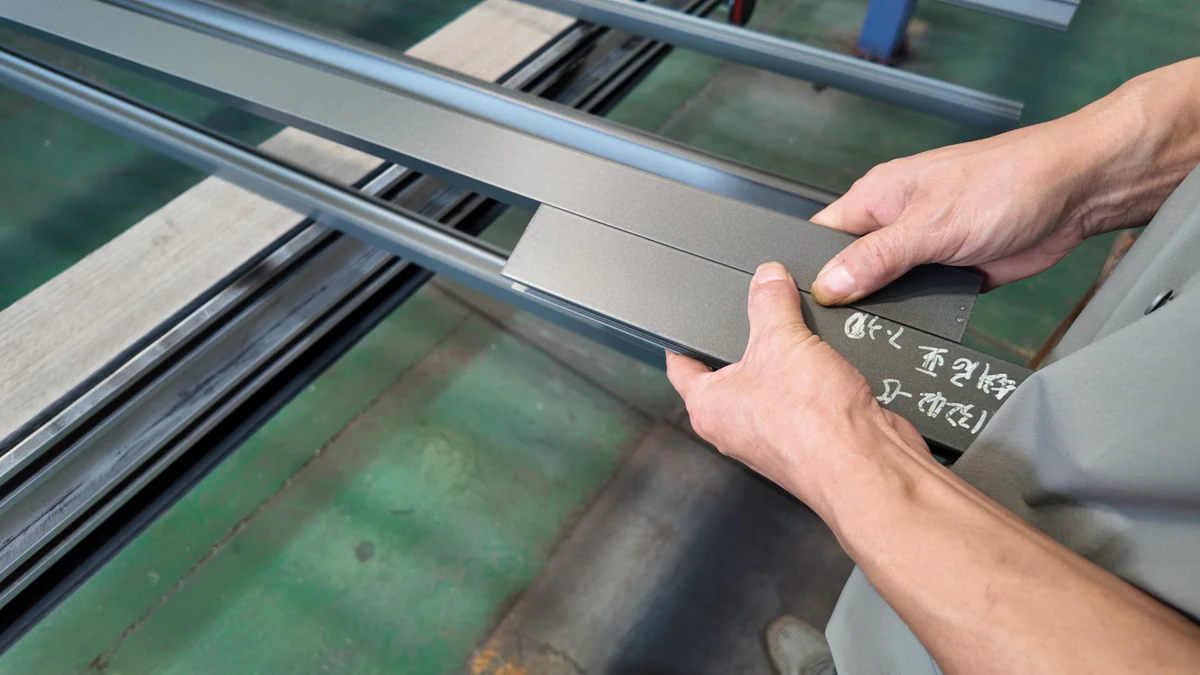
How wood-grain sublimation works
The profile first receives a compatible powder base coat. The decorative transfer medium is then held against the surface, commonly using a vacuum-bag process, and heated so that the pattern transfers into the receptive coating. This is different from applying a PVC wood-look sticker to the metal.
Transfer processing may use temperatures around 180–200°C. The actual part temperature, dwell time, vacuum and transfer system must follow the qualified material supplier's process. Pattern transfer depends on the complete system; a single claimed penetration depth is not an acceptance test for every product.
Guantian coordinates the powder base and decorative transfer at Sanshui. Its two in-house coating lines support plain colors and suitable wood-grain orders. Keeping these stages coordinated helps with scheduling and batch control, while final acceptance still follows the approved samples and inspection criteria.
Compare the finishes before choosing
| Feature | Weather-resistant powder coating | Wood-grain sublimation |
|---|---|---|
| Appearance | RAL references and agreed plain, metallic, matte or textured finishes. | Timber-like patterns such as oak, teak, walnut, cherry or rosewood, with available textured effects. |
| Process | Pretreatment, powder application and curing. | A compatible powder base followed by decorative heat transfer. |
| Film specification | Common project specifications are 60–80 micrometers; other thicknesses require agreement. | The powder base and transfer system are specified together; the pattern is not a substitute for the base-coat requirement. |
| Outdoor suitability | Depends on the powder grade, pretreatment and exposure specification. | Requires an outdoor-suitable combination of base powder and decorative transfer medium. |
| Cost and scheduling | Usually fewer process steps for a plain finish. | Additional wrapping, transfer and handling steps affect price and production time. |
A thicker coating is not automatically better. For some projects a film specification around 100 micrometers may be discussed, but edges, recesses, adhesion, cure and mating tolerances remain important. Coastal or otherwise demanding environments need an agreed coating system and maintenance plan, rather than a thickness figure alone.
Specify outdoor use explicitly
Indoor decorative transfer materials should not be substituted for an exterior specification. Strong sunlight, temperature changes, humidity and cleaning chemicals can expose weaknesses that are not obvious on a new showroom sample. State the destination, installation environment and the level of weathering documentation required before selecting the finish.
For an outdoor wood effect, approve both the powder base and the transfer reference. Two samples described as walnut can differ in background color, grain contrast and repeat pattern. Natural-looking variation should be distinguished from unacceptable batch differences. Agree how neighboring profiles will be grouped and viewed in the finished project.
Any warranty follows its named material, conditions, project scope and maintenance requirements. A powder manufacturer's document should not be presented as an unconditional warranty for every aluminum profile or every decorative transfer system. Ask which documentation applies to the selected finish.
Control color, thickness and appearance
A retained master plaque provides a reference for repeat comparison. Production planning should control the powder batch, color changeovers and line cleaning. Film-thickness measurements, appearance checks and the agreed adhesion test form part of the inspection plan. Color should be assessed under agreed lighting, especially when frame and sash parts will sit together.
Orange peel, local buildup or poor coverage can have several causes, including powder behavior, application settings, substrate condition and curing. Simply increasing or reducing film thickness may not correct the underlying problem. Suitable radii, for example around R0.5 where the design allows, can help with edge coverage, but geometry and the coating route should be reviewed together.
Protect decorative faces during thermal-break assembly, cutting, packing and transport. Confirm which sides are visible and whether cut ends require finishing. Keep protective film compatible with the coating and remove it within the agreed period after installation rather than leaving it exposed indefinitely.
Frequently asked questions
Can you prepare finish samples before production?
Yes. Sample plaques around 50 × 100 mm can be discussed, and two or three alternatives may help select the color or grain. For a critical assembly, also approve the finish on the actual section, where recesses and edges affect its appearance.
Can you coat long profiles?
Typical project lengths around 5.8–6.0 m can be reviewed for the line and selected process. Confirm longer sections before tooling or cutting, because handling, transfer equipment and packaging may set different limits.
Which finish is better for pergolas, louvers or garden gates?
Wood-grain aluminum is useful when a timber-like appearance is important; plain outdoor powder is useful when a consistent color or texture is preferred. Exposure, cleaning, coating grade and the approved sample determine the final specification. Both require appropriate care.
Request a finish comparison
Send the profile drawing, project location, visible surfaces, color or wood-grain reference and quantity. Contact us on WhatsApp to discuss samples and a compatible finishing route before approving bulk production.